Beyond the Slurpee: Why the Japanese Convenience Store Is America's New Dream Retail Experience
Let's be honest — the average American convenience store is not exactly a destination. Flickering lights, sad hot dogs on a roller grill, a candy wall that hasn't changed since 2003. You stop because you have to, not because you want to.
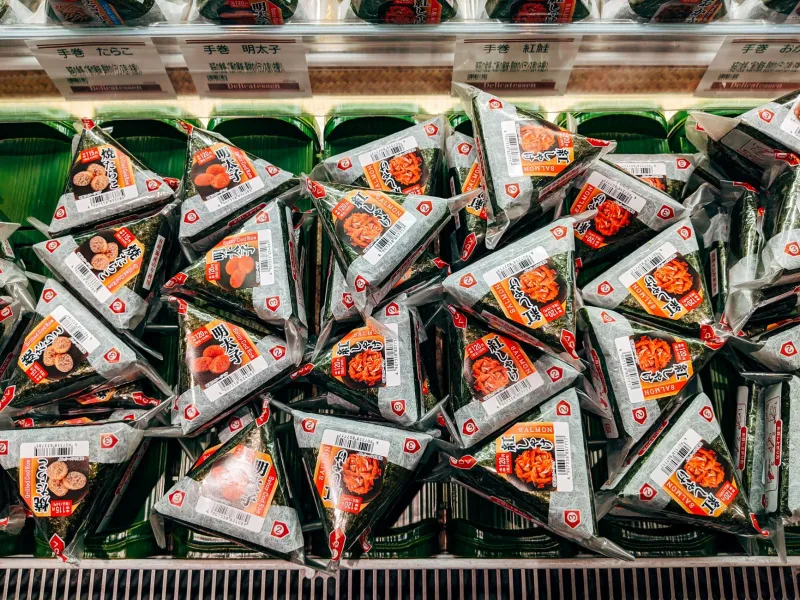
Now picture this instead: a spotless, softly lit space. Fresh onigiri wrapped in crisp packaging. Matcha lattes made to order. Seasonal limited-edition snacks you'd actually post about. A layout so intuitive it feels almost meditative. That's the Japanese combini — and for a growing number of Americans, it's become something close to a cultural obsession.
What Even Is a Combini?
Short for convenience store (コンビニ), the combini is a fixture of Japanese urban life. Chains like 7-Eleven Japan, Lawson, FamilyMart, and Ministop operate tens of thousands of locations across the country, open 24 hours a day, 365 days a year. But calling them convenience stores almost undersells it. These places function as community hubs — spots where you can pay your utility bills, pick up concert tickets, ship a package, grab a legitimately good hot meal, and browse a surprisingly thoughtful selection of stationery, skincare, and seasonal fashion accessories.
The food alone is a revelation. Japanese 7-Eleven's egg salad sandwiches have a near-mythological reputation online. Lawson's premium dessert line — think creamy strawberry shortcakes in clear plastic domes — regularly goes viral on TikTok. These aren't afterthoughts. They're engineered with the same attention to quality and presentation that you'd expect from a sit-down café.
Why Americans Are So Into This
Social media is a big part of the story. Travel vlogs, food content creators, and lifestyle influencers returning from Japan have spent years documenting their combini hauls with genuine awe. That content hit differently for millennials and Gen Z who grew up with algorithm-driven everything — suddenly here was a physical retail space that felt curated in the best possible way, without being pretentious about it.
There's also a nostalgia angle that's a little surprising. For younger Americans who never actually visited Japan, combini culture has become a kind of aspirational memory — something absorbed through anime, video games, and lo-fi playlists featuring rain sounds and the ambient hum of a fluorescent-lit shop at 2 a.m. The aesthetic is everywhere. It's cozy and urban at the same time. Functional but beautiful. Accessible but special.
That tension — between the everyday and the elevated — is exactly what's missing from most American retail.
The Design Philosophy That Changes Everything
Walk into a Japanese convenience store and you'll notice something almost immediately: nothing feels accidental. The shelving is tightly edited. Products are faced perfectly. The color palette is restrained. Even the packaging on store-brand items has a considered, almost graphic-design-forward quality that you'd expect from a boutique, not a gas station annex.
This isn't just aesthetics for aesthetics' sake. It reflects a broader Japanese retail philosophy rooted in the idea that a well-organized, well-designed space communicates respect for the customer. You're not being overwhelmed with options or bombarded by promotional signage. You're being gently guided through a thoughtful selection of things that are actually worth your time.
For American consumers increasingly fatigued by maximalist retail environments — the sensory overload of a big-box store, the decision paralysis of infinite online options — this kind of restraint feels genuinely radical.
The US Retailers Taking Notes
American brands have started paying attention. A new generation of urban convenience and grab-and-go concepts is quietly borrowing from the combini playbook. Look at the rise of upscale bodega-style shops in cities like New York, LA, and Chicago — places with clean lines, local and artisan products, and a strong visual identity. They're not directly copying Japan, but the influence is there in the curation, the packaging sensibility, and the emphasis on making a quick stop feel like a pleasant experience rather than a chore.
Even legacy American chains are experimenting. Wawa has long been praised for its above-average food quality. Sheetz built a cult following on customizable made-to-order meals. These aren't combinis, but they're evidence that Americans will respond when a convenience store takes itself seriously.
What's still largely missing stateside is the holistic lifestyle dimension — the sense that a convenience store can be a genuine third place, somewhere between home and work where you linger a little, feel taken care of, and leave with something that made your day slightly better.
The Combini as Cultural Mirror
Maybe the deepest reason Americans are drawn to combini culture is what it says about a different way of living. In Japan, these stores exist within a dense urban fabric where people walk, commute, and move through shared public spaces constantly. The combini fits that life perfectly — it's the pit stop that respects your time and your taste.
American life, especially suburban American life, was built around the car and the big-box store. Convenience meant volume — more parking, more options, more square footage. The combini flips that script entirely. Convenience means precision. It means the right thing, in the right place, presented beautifully, available whenever you need it.
That's a philosophy shift, not just a retail trend. And honestly? It's about time.