Panel Power: The Manga Aesthetic That's Taking Over American Brand Design
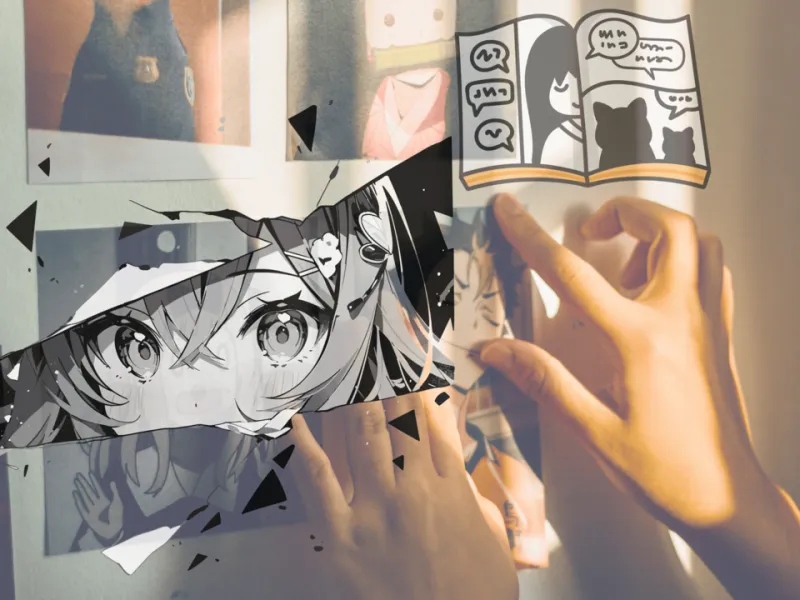
Photo: Vemisters, CC0, via Wikimedia Commons
The Panel Is the New Billboard
Flip through any major American brand's Instagram feed right now and you'll notice something different. The clean, minimalist product shots haven't disappeared entirely, but they're increasingly sharing space with something more kinetic — bold ink lines, exaggerated expressions, speech bubbles, dramatic speed lines. The manga aesthetic has arrived in American advertising, and it's not leaving anytime soon.
This isn't a niche design experiment. We're talking about major sneaker drops, fast-food collabs, tech startup campaigns, and streetwear labels all reaching for the same visual toolkit that Japanese manga artists perfected over the better part of a century. The question worth asking isn't just what is happening — it's why this particular visual language has become such powerful shorthand for cool, relatability, and innovation in the American market.
What Makes Manga Visually Different
To understand why manga aesthetics translate so effectively into advertising, it helps to understand what makes the style distinctive in the first place. Manga isn't just anime's print cousin — it's a sophisticated visual communication system with its own grammar.
The hallmarks are recognizable even to people who've never picked up a volume: high-contrast black and white linework, exaggerated emotional expressions (the wide eyes, the sweat drops, the dramatic reaction shots), dynamic panel compositions that guide the eye with real intentionality, and a storytelling rhythm that balances action with pause. Manga artists are masters of directing attention — they control exactly where you look and for how long.
For brand designers, that level of visual control is gold.
"Manga panels work like storyboards," says Jordan Reyes, a Brooklyn-based creative director who has led manga-influenced campaigns for several mid-sized American apparel brands. "You can walk a viewer through a product story — the problem, the solution, the emotional payoff — in a way that feels like entertainment rather than advertising. People don't feel sold to. They feel like they're reading something."
The Brands Getting It Right
Some of the most visible examples of manga-influenced American branding have come from the sneaker world, where Japanese street culture already has deep roots. Collaborations between US labels and Japanese artists have normalized the aesthetic for American consumers, but now brands are generating it in-house rather than relying on overseas partnerships.
One campaign that generated serious buzz involved a regional streetwear label out of Atlanta that launched an entire product line using a serialized manga-style narrative. Instead of traditional lookbook photography, they released a six-part illustrated story featuring a fictional character navigating city life — each installment dropped alongside a new product. The campaign ran entirely on social media and drove more engagement than any of their previous launches. The products sold out.
Food and beverage brands have also leaned in. Several energy drink companies have adopted manga-inspired character mascots with full illustrated backstories, moving away from the generic extreme-sports imagery that defined the category for years. The character-driven approach creates something a logo alone can't: an actual story that consumers can follow and invest in.
Tech startups, particularly in the gaming and app space, have been early and enthusiastic adopters. When your product is inherently digital and your target demographic grew up on anime and manga, the visual language is almost a given. But what's interesting is that the aesthetic is now crossing into categories you wouldn't expect — financial services, health and wellness, even real estate.
Why American Designers Are Drawn to the Manga Toolkit
There's a generational factor driving this from the design side as well. American graphic designers and art directors in their 20s and 30s grew up with manga and anime as genuine cultural touchstones, not exotic imports. For this generation, manga aesthetics aren't foreign — they're part of the visual vocabulary they absorbed alongside superhero comics, video games, and Saturday morning cartoons.
That fluency shows in the work. The best manga-influenced American brand design doesn't feel like appropriation or pastiche — it feels like a natural extension of a visual tradition that has been part of American creative culture for decades.
"I don't think of it as 'using manga,'" says Aisha Thornton, a visual designer at a New York-based branding agency whose clients span fashion and tech. "I think of it as using good visual storytelling principles. Manga just happens to have refined those principles to an incredibly high level. The expressive range, the pacing, the way a single panel can carry so much emotional weight — that's craft. And craft is universal."
The Authenticity Question
Of course, any conversation about American brands borrowing from Japanese visual culture has to address the authenticity question. When does creative influence tip into shallow trend-chasing — or worse, cultural strip-mining that ignores the tradition's actual depth?
The designers and brand strategists doing this work thoughtfully tend to draw a clear line between genuine engagement and surface-level aesthetics. Brands that hire Japanese artists or artists deeply immersed in manga culture, that acknowledge their influences openly, and that build campaigns with real narrative substance rather than just slapping ink lines on a product photo — those tend to land well with consumers. The ones that treat manga as a visual flavor of the month get called out fast, especially by audiences who actually know the source material.
Social media has made that accountability more immediate than ever. Manga fans are a passionate, knowledgeable community, and they notice when the aesthetics feel hollow. Getting it wrong isn't just a creative miss — it's a PR problem.
The Deeper Appeal
Strip away the aesthetics for a moment and you get to what's really driving this trend: a hunger for storytelling in brand communication. American consumers, particularly younger ones, have developed sophisticated filters for traditional advertising. They skip it, scroll past it, and block it. What they don't skip is a story they're invested in.
Manga, at its core, is a storytelling medium built for engagement. Every element — the pacing, the character design, the visual tension between panels — is engineered to keep a reader moving forward. When brands borrow that architecture, they're not just borrowing a look. They're borrowing a relationship between creator and audience.
That might be the most Japanese thing about this whole trend. In manga, the reader is an active participant — filling in the gaps between panels, projecting emotion onto characters, completing the story in their own imagination. The best brand campaigns inspired by manga do the same thing. They don't tell you what to feel. They give you the panels and let you connect the dots.
That's a lesson that travels pretty well.