Mic Drop Moments: How Karaoke Became America's Most Unexpected Social Ritual
The Room Where Nobody Judges You
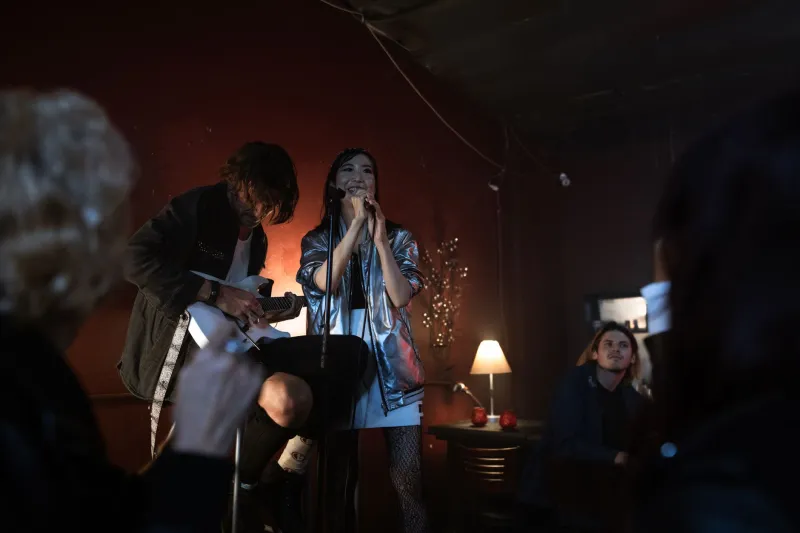
There's something almost magical about a karaoke private room on a Friday night. The lights are low, the song list is endless, and somewhere between the second chorus of a Beyoncé anthem and a surprisingly emotional rendition of "Bohemian Rhapsody," something shifts. People stop performing for each other and start performing with each other. That's the karaoke code — and American cities are finally cracking it.
Karaoke has been a fixture in Japanese culture since the 1970s, when Daisuke Inoue's coin-operated machine gave salary workers in Kobe a way to unwind after brutal work weeks. The concept was deceptively simple: sing along to backing tracks in a judgment-free zone. But the social architecture underneath it? That was something far more sophisticated. In Japan, karaoke isn't just entertainment — it's a carefully maintained social ritual that helps people navigate hierarchy, express vulnerability, and build real connection.
Now, that same ritual is quietly rewiring how Americans socialize after dark.
From Dive Bar Staple to Cultural Phenomenon
For years, karaoke in the US meant one thing: a slightly sticky microphone, a bored host, and the courage to perform in front of a room full of strangers. Open-mic karaoke had its fans, sure, but it never quite clicked as a mainstream social experience. The barrier to entry was just too high for most people.
Then the private room model arrived — and everything changed.
"When we opened with private rooms instead of a stage format, the response was immediate," says Marcus Lien, co-owner of a karaoke lounge in Los Angeles that's been booked solid on weekends since its first month. "People who said they'd never do karaoke were suddenly coming in for birthday parties, team outings, date nights. The private room removes the fear. Once that fear is gone, people just... open up."
That shift from public performance to intimate group experience mirrors exactly how karaoke functions in Japan. The karaoke box — a private room rented by the hour — is a cornerstone of Japanese social life. It's where coworkers bond after long shifts, where couples go on dates, where friend groups celebrate everything from graduations to Monday nights. The private format makes it accessible to people who would never dream of belting out "Total Eclipse of the Heart" in front of a crowd of strangers.
Across US cities — New York, LA, Chicago, Houston, Seattle — private karaoke lounges have been multiplying fast. The business model is thriving, and the demographics are broader than you might expect.
Why It Actually Works: The Psychology Behind the Mic
Dr. Sandra Okafor, a cultural anthropologist at a university in Chicago who studies participatory entertainment, has been tracking karaoke's social evolution in American cities for the past several years. Her take is direct: Americans are starving for authentic communal experiences, and karaoke delivers them in a format that feels low-stakes enough to actually try.
"We live in a culture that's extremely performance-oriented and judgment-heavy," she explains. "Social media has made people hyperaware of how they're perceived. Karaoke, especially in a private room, creates a temporary bubble where the usual rules don't apply. You're allowed to be bad. You're expected to be a little ridiculous. That's genuinely rare in American social spaces."
There's also something to be said about the act of choosing a song together. Flipping through a catalog, debating between decades, arguing over whether anyone should be allowed to sing slow jams before midnight — that negotiation process is itself a bonding ritual. You learn a lot about someone by what they pick and how they sound when they think no one's really watching.
Regular karaoke-goers tend to agree. Priya Nair, a 29-year-old marketing manager in New York who hits a karaoke spot in Koreatown at least twice a month, puts it plainly: "It's the only place I go out where I'm not on my phone the whole time. Everyone's just present. That's hard to find."
The Koreatown Effect and the American Karaoke Map
It's worth noting that karaoke's American resurgence has been significantly shaped by Korean-American communities, particularly in cities like LA and New York. Korean-owned norebang establishments — which operate on the same private-room model as Japanese karaoke boxes — helped normalize the format for American audiences and introduced a level of production quality (better sound systems, touchscreen song catalogs, bottle service) that elevated the whole experience.
This cross-cultural layering is part of what makes karaoke's American evolution so interesting. It arrived from Japan, got refined and popularized through Korean-American culture, and is now being adopted and adapted by pretty much everyone. It's a genuinely multicultural phenomenon — and its roots in Asian social culture are a big part of why it works so well.
"The Japanese concept of ma — the meaningful pause, the space between things — shows up in karaoke in a subtle way," says cultural consultant Yuki Hashimoto, who advises entertainment businesses on Asian cultural concepts. "It's about what happens between the songs. The laughter, the teasing, the moment someone unexpectedly nails a high note. That's where the actual connection happens."
Nightlife's New North Star
Bar owners and nightlife entrepreneurs are paying close attention. Several major hospitality groups have pivoted toward karaoke-integrated concepts, recognizing that the experience economy demands participation, not just consumption. People don't just want to drink and watch — they want to do something together.
Karaoke fits that demand perfectly. It's affordable, repeatable, and endlessly customizable. You can do it for a bachelorette party or a quiet Tuesday with two friends. The floor is low and the ceiling is nonexistent.
There's also a generational piece at play. Gen Z, in particular, has embraced karaoke with a kind of earnest enthusiasm that might surprise people who assume younger Americans are too irony-poisoned to genuinely enjoy something so unguarded. Turns out, the generation that grew up performing on TikTok is actually pretty comfortable with a microphone.
What Japan understood fifty years ago, America is just now catching up to: sometimes the best night out isn't the one where everything looks perfect. It's the one where everyone sounds a little terrible, and nobody cares.