Anime Beats in American Studios: The Unlikely Sound That's Reshaping US Music
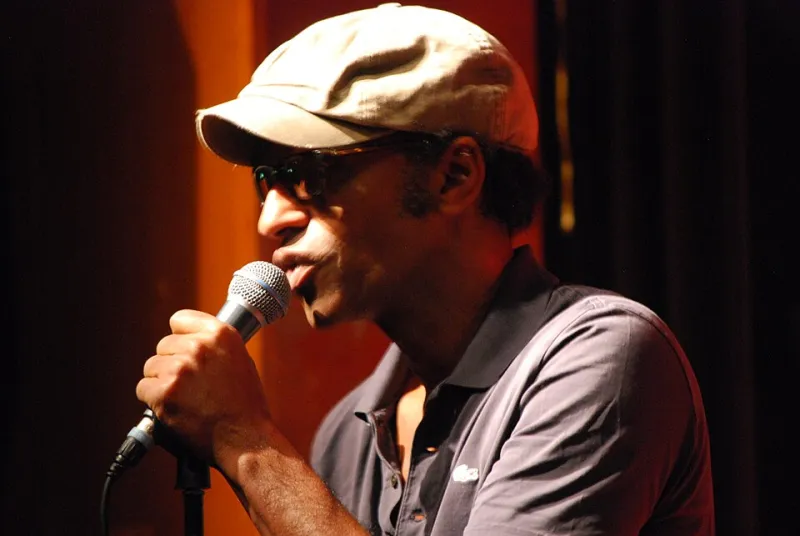
Photo: R.P. Braun, CC BY-SA 4.0, via Wikimedia Commons
Picture a Los Angeles studio session circa 2024. The producer pulls up a reference track — not a hip-hop classic, not a pop hit, not even a jazz record. It's the opening theme from a mid-2000s anime series. The artist in the booth nods slowly. "Yeah," they say. "That's exactly the feeling I want."
This scene is playing out more often than you might think. Across genres, across career levels, from bedroom producers in Atlanta to major-label sessions in New York, American musicians are drawing deep from the well of anime and video game soundtracks. The influence has moved well past novelty. It's structural now — built into how a new generation of US artists thinks about melody, texture, emotional arc, and production.
How did we get here? The answer is more interesting than a simple "anime got popular" explanation.
The Emotional Architecture of Anime Music
To understand why American musicians are gravitating toward these sounds, you have to understand what makes anime soundtracks compositionally distinct. Japanese composers working in the anime and game space — figures like Yoko Shimomura, Yuki Kajiura, Joe Hisaishi, and Kenichiro Fukui — operate with an emotional directness that Western pop and film music often deliberately avoids.
Where a Hollywood score might use restraint to build tension, an anime score leans in. The emotional peak hits harder, the quiet moments feel more exposed, and the melodic themes are often strikingly simple — almost naive in their directness — which paradoxically makes them more affecting, not less. There's a reason people cry at the Your Name soundtrack in movie theaters worldwide, regardless of whether they understand a word of Japanese.
For American producers trained on a diet of Western music theory and commercial production techniques, encountering this approach can feel like discovering a new instrument. The tools are familiar — orchestral elements, synths, guitar — but the emotional logic is different.
"The first time I really sat with the Cowboy Bebop soundtrack, I felt like I was hearing jazz for the first time again," says Marcus Webb, an indie producer based in Nashville whose recent project blends country songwriting with production techniques he traces directly to anime OST study. "It was jazz, technically. But it was doing something emotionally that I hadn't heard jazz do before. That unlocked something in me."
Sampling, Interpolation, and the Legal Gray Zone
The most direct form of anime influence in American music comes through sampling — and it's a complicated space. Some artists have cleared samples from anime and game soundtracks and released tracks commercially. Others operate in a murkier territory, particularly in the lo-fi and hip-hop underground, where anime samples have been a foundational element for years.
The lo-fi hip-hop movement — those endless YouTube streams of looped beats with anime girl study visuals — is the most visible example, but it undersells how deep the influence actually runs. The aesthetic of that movement has seeped into mainstream production. That particular combination of dusty drums, chopped jazz samples, and melancholic melody lines that you hear on tracks by artists like Joji (himself a fascinating case study in Japanese-American cultural fusion) owes a significant debt to anime soundtrack sensibility.
More recently, producers have moved from sampling toward interpolation and original composition inspired by anime techniques. This is legally cleaner and, arguably, more creatively interesting. Rather than lifting a specific sound, artists are absorbing a compositional approach and applying it to entirely original work.
Case Studies: Where the Crossover Gets Real
The evidence is everywhere once you start looking.
Take the wave of American artists who have explicitly cited Attack on Titan composer Hiroyuki Sawano as a direct influence. Sawano's signature — massive orchestral builds, operatic vocals in invented languages, electronic percussion that hits like a freight train — shows up as a clear reference point in the production work of several prominent American hip-hop and pop producers. The specific technique of building a track to an almost uncomfortable emotional peak before releasing it is Sawano 101, and it's now showing up in US pop production with increasing regularity.
Or consider the video game side of this equation. The Persona series soundtracks, composed primarily by Shoji Meguro, have developed a cult following among American musicians that has translated into measurable production influence. The Persona 5 soundtrack in particular — with its blend of acid jazz, funk, and J-pop — has been cited by American artists in genres as far apart as indie rock and contemporary R&B.
And then there's the Studio Ghibli effect. Joe Hisaishi's work for Miyazaki's films has become a genuine touchstone for a generation of American singer-songwriters. The specific quality of those piano-led orchestral pieces — warm, nostalgic, emotionally unguarded — is something US artists are consciously chasing in their own work.
A New Genre That Doesn't Have a Name Yet
Something interesting happens when you put all of this together: you start to see the outlines of a new genre that doesn't quite have a clean label. Call it anime-influenced American music, or J-pop adjacent, or just the sound of two musical cultures genuinely talking to each other. Whatever you call it, it's real and it's growing.
Artists operating in this space are creating music that feels simultaneously American and Japanese without feeling like a gimmick. It's not novelty fusion. It's the natural output of a generation that grew up consuming both cultures simultaneously — watching Naruto on Cartoon Network and listening to Kanye, playing Final Fantasy and going to rap concerts.
The production community around this emerging sound is tight-knit and deeply online. Discord servers, Reddit communities, and YouTube channels dedicated to analyzing anime composition techniques have become informal schools for a generation of American producers who are teaching themselves the vocabulary of Japanese soundtrack composition and applying it to their own work.
Why This Matters Beyond the Music
There's something culturally significant happening here that goes beyond genre trends. When American musicians cite Japanese composers as primary influences — when they're studying Yoko Shimomura's chord voicings the way a previous generation studied John Coltrane — it represents a genuine shift in where American creative culture looks for inspiration.
For a long time, the flow of influence was assumed to move primarily from America outward. American pop, American hip-hop, American rock — these were the exports. The idea that Japanese anime composers would become foundational influences on American mainstream music would have seemed far-fetched even fifteen years ago.
But here we are. The cultural bridge runs both ways now, and the music coming out of the crossing is genuinely exciting. It's emotionally direct in a way American pop often isn't. It's technically ambitious in ways that challenge both producers and listeners. And it carries with it a whole set of cultural references and emotional associations that mean something to a generation of Americans who grew up with anime as a core part of their creative diet.
The anime beat in the American studio isn't a trend. It's a new foundation. And the songs being built on it are just getting started.
